
Fire Safety Systems Market Undergoing Transformation Driven by Artificial Intelligence
The global Fire Safety Systems Market is undergoing a significant transformation as organizations increasingly adopt intelligent safety technologies to protect people, assets, and critical infrastructure.
As commercial buildings, industrial facilities, healthcare institutions, data centers, and smart city projects become increasingly interconnected, traditional fire safety systems are no longer sufficient. Building owners and facility managers are now seeking integrated platforms capable of providing real-time monitoring, predictive maintenance, remote diagnostics, and rapid emergency response.
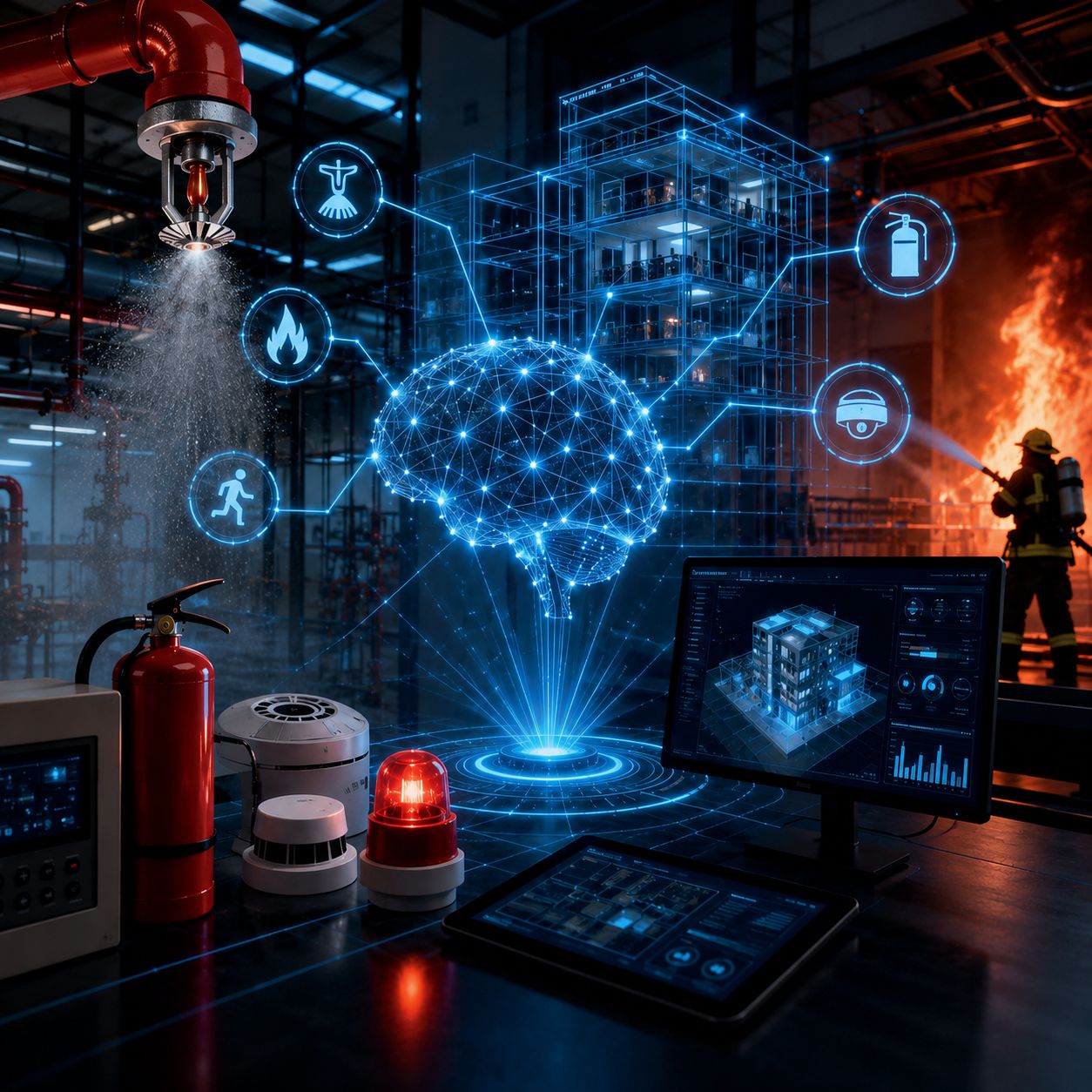 Modern fire protection systems are increasingly being integrated into broader building management ecosystems. This integration enhances situational awareness while enabling faster and more informed decision-making during emergencies.
One of the most important trends driving market growth is the shift from reactive fire safety to proactive risk management. Through advanced sensors, data analytics, and intelligent monitoring capabilities, connected fire protection systems can identify potential problems before they develop into major incidents. This predictive approach helps organizations improve compliance, reduce downtime, and strengthen overall operational resilience.
The industrial sector, in particular, is emerging as a major growth area for advanced fire protection solutions. Manufacturing facilities, power plants, warehouses, and critical infrastructure face increasingly complex fire risks associated with automation, electrification, and high-value equipment. Connected fire safety technologies provide continuous monitoring and enhanced protection for these environments, helping organizations minimize operational disruptions and financial losses.
Another important factor accelerating demand is the growing emphasis on regulatory compliance and building safety standards. Governments and regulatory authorities worldwide continue to strengthen fire safety requirements, particularly for commercial buildings, transportation infrastructure, healthcare facilities, and industrial operations. Intelligent fire protection systems help organizations meet these evolving requirements while providing greater visibility into system performance and maintenance needs.
The rise of smart cities is also creating significant opportunities for the Fire Safety Systems Market. Urban development projects increasingly incorporate connected infrastructure designed to improve public safety, sustainability, and operational efficiency.
Strong Demand for Intelligent Fire Detection Systems
Modern fire detection systems increasingly incorporate technologies such as:
- Multi-sensor technologies
- AI-powered analytics
- Advanced smoke detection and recognition
- Real-time diagnostics
- Remote monitoring capabilities
Customers are increasingly prioritizing faster detection while simultaneously seeking to reduce false alarm rates.
Integration with Smart Buildings
Building owners are increasingly looking for unified platforms capable of managing multiple building functions, including:
- Fire safety
- Occupancy monitoring
- Energy consumption
- Physical security
- Environmental controls
The convergence of these technologies is creating new growth opportunities for technology providers while transforming the way buildings are monitored and managed.
Predictive Maintenance Gains Importance
Maintenance services are expected to record significant compound annual growth during the forecast period.
Organizations are increasingly moving toward condition-based and predictive maintenance models that leverage connected devices and advanced analytics to identify potential failures before they occur.
This approach can improve system reliability, reduce unexpected downtime, optimize maintenance costs, and ensure that critical fire protection systems remain operational when they are needed most.
Industrial Safety Modernization
The industrial segment is expected to achieve the highest compound annual growth rate (CAGR) of 7.3%.
Industrial facilities face unique fire risks due to hazardous materials, complex machinery, high-temperature operations, and large-scale continuous production environments.
As industrial facilities become increasingly digitalized and automated, advanced fire protection solutions are becoming essential components of broader industrial digitalization and safety strategies.
Regional Growth Opportunities
The Asia-Pacific region is expected to record the highest CAGR of 8.0%.
Rapid urbanization, infrastructure expansion, manufacturing growth, and increasingly stringent regulatory enforcement are driving significant investment, particularly in markets such as China, India, Southeast Asia, South Korea, and Japan.
These markets offer substantial opportunities for technology providers focused on advanced fire safety and fire protection solutions.
Key Industry Trends Accelerating Market Growth
Increasing Enterprise Adoption of Connected Safety Systems
Businesses are increasingly viewing safety infrastructure as a strategic investment rather than simply a compliance expense.
Connected fire protection systems can support:
- Business continuity
- Risk reduction
- Regulatory compliance
- Asset protection
- Operational efficiency
As a result, enterprise adoption of advanced fire safety technologies continues to accelerate across multiple industries.
Infrastructure Expansion and Urban Development
Large-scale investments in smart cities, transportation hubs, airports, hospitals, educational institutions, and commercial complexes are generating sustained demand for advanced fire safety solutions.
Governments worldwide are placing greater emphasis on developing resilient infrastructure designed to minimize risks, further increasing the need for modern fire safety technologies.
Artificial Intelligence Integration in Fire Protection
Artificial intelligence is becoming an important differentiator within the fire protection industry.
AI-powered systems can:
- Predict equipment failures
- Improve alarm accuracy
- Analyze environmental conditions for potential risks
- Support emergency decision-making
- Detect anomalies, deficiencies, and system faults
As AI adoption becomes more widespread, fire protection systems are expected to become increasingly intelligent, predictive, and autonomous.
Regulatory Evolution
Building codes and fire safety regulations continue to evolve worldwide.
New requirements increasingly call for:
- Advanced monitoring capabilities
- Faster emergency response mechanisms
- Improved system reliability
- Digital record keeping
- Comprehensive safety inspections
Regulatory modernization is therefore expected to remain a strong driver of market growth.
Sustainability and Energy Efficiency
Organizations are increasingly seeking solutions that align with their sustainability objectives.
Modern fire protection systems can contribute to these goals through:
- Energy-efficient devices
- Optimized maintenance programs
- Reduced system downtime
- Integration with green building platforms
Sustainability considerations are increasingly influencing purchasing decisions across both the public and private sectors.
Global Fire Safety Systems Market Expected to Reach USD 118.14 Billion by 2030
 According to MarketsandMarkets, the global Fire Safety Systems Market is expected to grow from USD 85.06 billion in 2025 to USD 118.14 billion by 2030, representing a compound annual growth rate (CAGR) of 6.8% during the forecast period.
The fire suppression segment is expected to maintain the largest market share, while maintenance services are also projected to experience strong growth as organizations increase investment in predictive and condition-based maintenance strategies. The industrial sector is expected to record the highest growth rate, reflecting increasing demand for advanced safety systems capable of operating in complex industrial environments.
Regional growth patterns further reinforce the market's positive outlook. The Asia-Pacific region is expected to achieve the highest CAGR during the forecast period, driven by rapid urbanization, industrial expansion, infrastructure investment, and increasingly stringent fire safety regulations.
Countries such as China, India, Japan, and South Korea continue to invest heavily in modern building technologies and public safety infrastructure, creating significant opportunities for fire protection solution providers.
The Future of Fire Protection: Connected, Automated and Intelligent
Looking ahead, the future of fire protection will be shaped by greater connectivity, automation, and intelligence.
Emerging technologies such as AI-powered threat detection, cloud-based monitoring platforms, digital twins, and predictive analytics are expected to further enhance fire safety capabilities.
Organizations that embrace these technologies will be better positioned to improve risk management, strengthen regulatory compliance, enhance operational resilience, and protect critical assets in an increasingly complex operating environment.


